
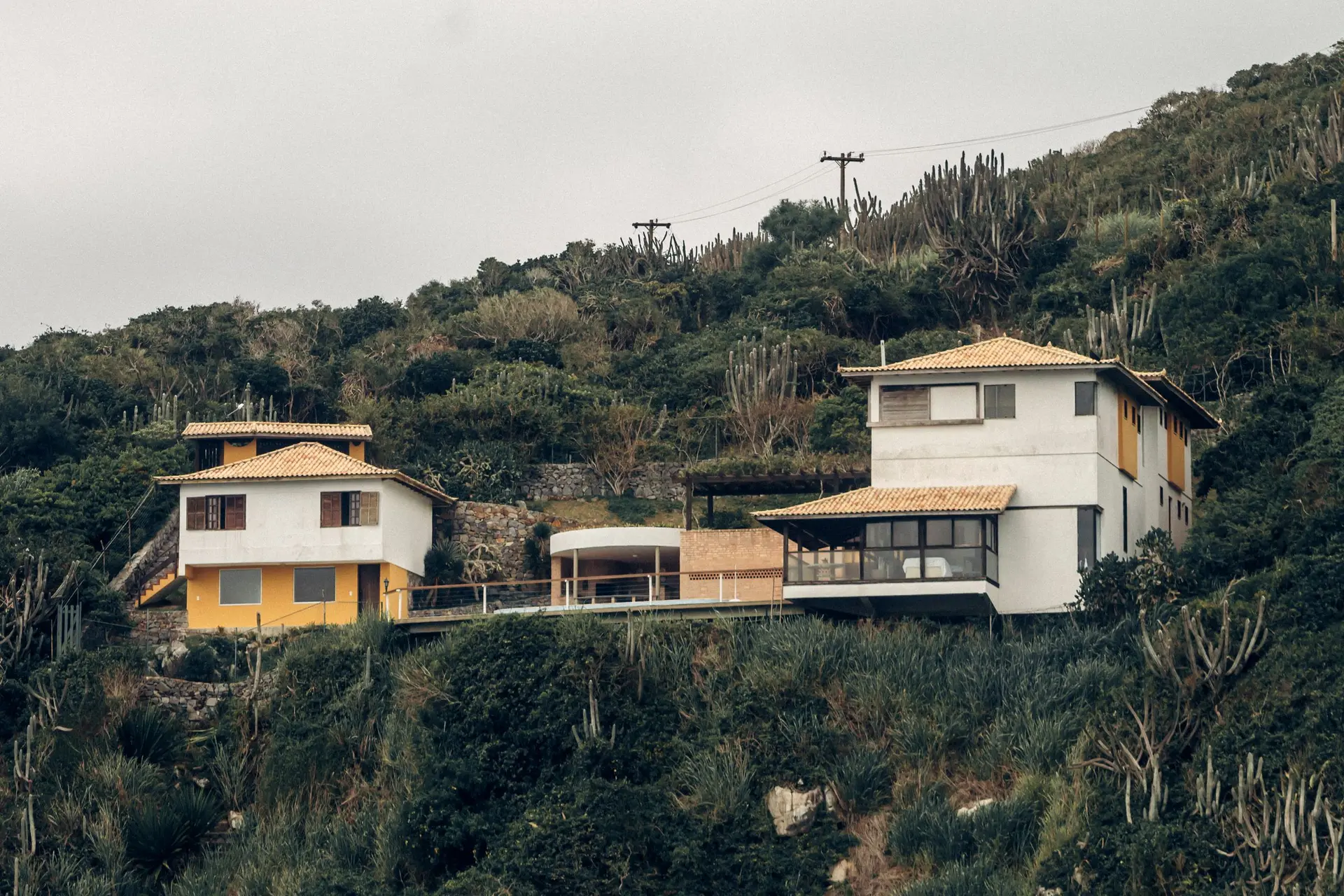
Hiring a custom home builder is a different decision from hiring a contractor for a kitchen. The job runs longer, more money changes hands, and more of the work happens below ground where you cannot judge it by looking. On a sloped lot in Los Angeles or Ventura County, the gap between a builder who understands the ground and one who does not shows up in the foundation, the drainage and the change orders.
This guide covers how the work can be organized, what hillside know-how looks like when you meet a builder, how to check a license and insurance, how a contract should read, and the questions to ask before you sign.
Design-build or architect plus builder
There are two common ways to organize a custom house.
Architect, then builder. You hire an architect who designs the house and produces drawings. Then builders bid on those drawings, or you negotiate with one builder. You get a design shaped by your wishes, and a competitive price on a finished set of plans. The risk is that the design runs ahead of the budget, and you learn that only when bids come back.
Design-build. One company handles design and construction under one agreement, often with an architect on its team or as a partner. Cost feedback comes during design, so the plan and the budget move together. The trade-off is less price competition, because there is no bid on a finished set.
A third route sits between them: hire the architect, and bring a builder in early to price the design as it develops. On a hillside lot this is often the most useful option, because the builder can flag foundation and access costs while the design can still change.
What hillside experience looks like in practice
Every builder will say they can build on a slope. Here is how to tell in a first meeting.
They ask about the ground before the house. Expect questions about the survey, the soils report, the existing walls, where water goes and how trucks reach the lot. A builder who starts with finishes has skipped the part that decides the budget.
They can explain the foundation choices. Spread footings, stepped foundations, caissons and grade beams each have a place. A builder should be able to say which ones your lot may need, and that the engineer makes the final call.
They talk about access as a cost. Pump lines for concrete, lifts for lumber, delivery limits on a narrow street, and staging space. These belong in the price from the first estimate.
They separate site costs from house costs. If the first number you get is a single figure per square foot, ask for the site work, foundation and walls on their own lines.
License, insurance and how to check them
In California, a contractor working on a house must hold a license issued by California's Contractors State License Board. You can look up any license on the board's website by name or number. Check that it is active, that the classification fits the work (a general building contractor for a new house), and that the name on the license matches the company on the contract.
The same lookup shows whether the contractor has a bond on file and whether workers' compensation insurance is on record or the contractor has declared no employees. A builder of a whole house will have a crew or subcontractors, so an exemption on file is worth a question. Ask for a certificate of general liability insurance as well, issued by the insurer.
How the contract, schedule and payments should read
A good contract for a custom house is specific. Look for:
- A scope that matches the plans. The contract should name the drawings and the specifications by date or revision.
- Allowances in writing. Where finishes are not chosen yet, each allowance should state its amount and what it covers.
- A payment schedule tied to progress. Payments should follow completed stages, such as foundation, framing or dry-in, not dates on a calendar. California law limits the down payment on home improvement contracts, and a large first payment on any house contract is worth questioning.
- A change order process. Every change should be written, priced and signed before the work is done.
- Who carries what. Permits, inspections, engineering, utility connections and temporary services should each be assigned to you or the builder.
- Schedule terms. A start condition and a sequence of stages, with the factors that can move it, such as permit review, weather and inspections.
- Lien releases. Conditional and unconditional releases from the builder and major subcontractors, exchanged with payments.
Questions to ask before you sign
- What does my lot need below grade, and how did you arrive at that?
- Which costs in this quote are allowances, and which are fixed?
- How will materials and equipment reach the site?
- Who coordinates the engineer, the surveyor and the city?
- Who will run the job on site, and how will we talk each week?
- What happens if the soils report changes the foundation design?
- How are change orders priced and approved?
A builder who answers these plainly, with the ground first, is giving you a preview of how the job will run.
Where to start
Mesa Rock Construction builds from its base in Calabasas across Los Angeles and Ventura Counties, with the lot read before the house is priced. Our new construction page lays out how a custom build runs, and our structural work page covers the foundations and walls a hillside house sits on. If you are weighing a smaller project first, our room additions page explains how additions are planned on a slope.